Monitors for Every Setup: From 1080p Gaming to 4K and Ultrawide Displays
Modern monitors are no longer defined by screen size alone. Resolution, refresh rate, panel technology, response time, aspect ratio, color performance, and connectivity can completely change how a PC feels in gaming, productivity, and entertainment.
A competitive gamer may prefer a fast 1080p | FHD display, while another player may choose 2K | QHD for a balance between sharp visuals and high frame rates. Users focused on image detail, professional work, or premium gaming may instead consider 4K | UHD monitors.
Brands such as Asus, Gigabyte, and LG provide options across these categories, while specialized displays such as the LG UltraGear 45GX950A-B target users looking for a more immersive gaming experience. Specific model searches such as 27GM950B-B also show why checking exact specifications is important before choosing a display.
The best monitor is therefore the one that matches your PC performance and the experience you want from it.
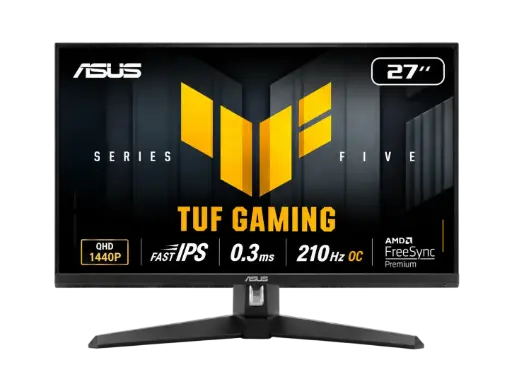
Start With How You Use Your Monitor
Before comparing brands or specifications, think about your main use.
For competitive gaming, smooth motion and high refresh rates may matter more than maximum resolution. For cinematic single-player games, resolution, contrast, HDR capabilities, and screen size can become more important.
Content creators may prioritize color accuracy and workspace, while someone using a monitor for office applications might value ergonomics and connectivity more than gaming features.
Most users can place themselves into one of several categories:
- Competitive gaming
- AAA and immersive gaming
- Content creation
- Office and productivity
- Entertainment
- Mixed PC use
Once you understand your main purpose, comparing monitors becomes much easier.
1080p | FHD Monitors for Fast-Paced Gaming
1080p | FHD remains an important resolution category, particularly for competitive gaming and budget-focused PC setups.
Full HD typically refers to a resolution of 1920 × 1080 pixels. Compared with higher resolutions, FHD requires fewer pixels to be rendered by the graphics card, which can make achieving high frame rates easier with compatible hardware.
This can be especially valuable in competitive games where responsiveness and smooth motion are priorities.
Players using high-refresh-rate displays may prefer to allocate more of their budget toward refresh rate and GPU performance rather than moving immediately to a higher resolution.
FHD can also work well for everyday tasks, studying, browsing, and office applications.
Screen size matters, however. As displays become larger, the lower pixel density of 1080p may become more noticeable depending on viewing distance.

2K | QHD Monitors for a Balanced Experience
For gamers wanting greater visual detail without immediately moving to 4K, 2K | QHD monitors provide an attractive middle ground.
In consumer monitor terminology, QHD commonly refers to 2560 × 1440 pixels, also known as 1440p.
QHD provides more screen detail and workspace than FHD while generally placing less demand on the graphics card than 4K.
This balance has made QHD particularly attractive for gaming PCs.
A capable GPU combined with a high-refresh QHD monitor can provide both detailed visuals and smooth gameplay. QHD can also be useful for productivity because the additional resolution provides more working space for applications and multiple windows.
For users building a PC that handles gaming, work, and entertainment, QHD can therefore be a versatile option.
4K | UHD Monitors for Maximum Visual Detail
4K | UHD displays target users who prioritize image detail and screen workspace.
A common UHD monitor resolution is 3840 × 2160 pixels, providing four times the total pixel count of 1920 × 1080.
That additional resolution can be useful for detailed gaming environments, high-resolution media, photo editing, video production, design, and productivity.
However, 4K gaming can demand substantially more GPU performance.
A user purchasing a 4K gaming monitor should therefore consider whether the graphics card can provide the desired frame rates at that resolution and graphics quality.
The monitor's refresh rate also matters. A high-refresh 4K gaming display places very different demands on a PC from a 60Hz productivity-focused UHD monitor.
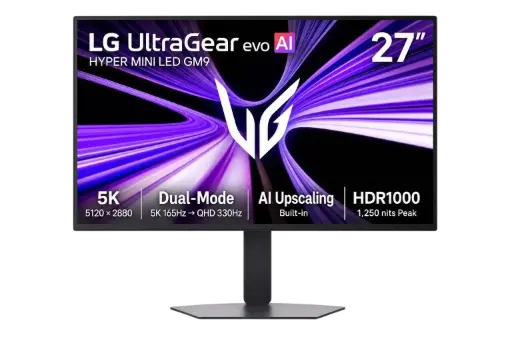
Which Resolution Matches Your Gaming PC?
Instead of asking which resolution is universally best, match the display to your PC and priorities.
ResolutionTypical PixelsMain Advantage1080p / FHD1920 × 1080High FPS and accessibility2K / QHD2560 × 1440Balance of detail and performance4K / UHD3840 × 2160Maximum image detail
A powerful GPU may make high-resolution, high-refresh gaming practical, while a more modest graphics card may deliver a better overall experience at FHD or QHD.
Your target games matter too. Competitive esports titles and graphically intensive AAA games can have very different hardware requirements.
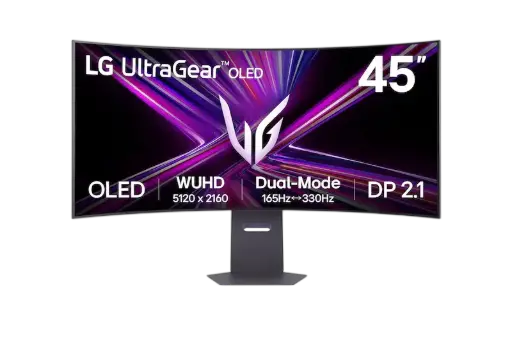
Asus Monitors: From Competitive Gaming to Premium Displays
Asus provides monitors across gaming, productivity, professional, and creator-focused categories.
For gaming, buyers can find models emphasizing high refresh rates, low response times, adaptive synchronization, and different combinations of FHD, QHD, and UHD resolutions.
Asus also has displays targeting users who prioritize color reproduction and professional applications.
Instead of choosing based solely on the Asus name, compare individual models according to:
Resolution – Refresh Rate – Panel – Response Performance – HDR – Connectivity – Adaptive Sync – Ergonomics.
This allows you to identify which Asus monitor actually matches your PC.
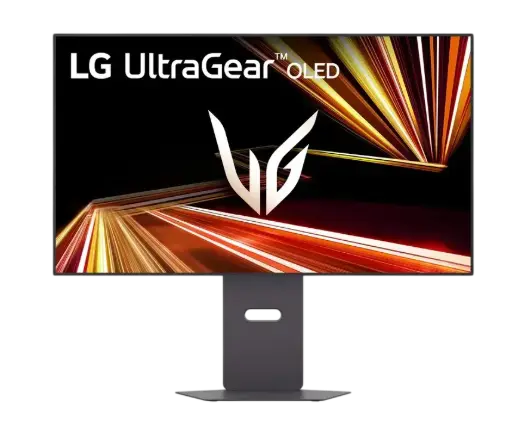
Gigabyte Monitors for Performance-Focused Setups
Gigabyte also provides multiple monitor options for PC gaming and general computing.
A Gigabyte gaming monitor can be particularly interesting when building a setup around a specific resolution and refresh-rate target.
For example, a high-refresh QHD display can complement a performance-focused gaming PC differently from a 4K monitor designed around image quality.
Connectivity should also be checked carefully. The available HDMI and DisplayPort versions and capabilities can influence which resolutions and refresh rates are supported with different devices.
If you use both a gaming PC and console, checking input options becomes even more important.
LG Monitors: Gaming, Ultrawide, and Productivity
LG has a broad display portfolio covering conventional desktop monitors, productivity screens, high-resolution displays, ultrawide formats, and gaming products.
The company's UltraGear line focuses on gaming-oriented displays.
When comparing an LG monitor, consider how its panel type, resolution, refresh rate, aspect ratio, and size fit your intended use.
A standard 27-inch QHD monitor, for example, creates a very different desktop experience from a large ultrawide display.
This is why comparing monitors solely by refresh rate or resolution can be misleading.
LG UltraGear 45GX950A-B for Immersive Gaming
The LG UltraGear 45GX950A-B represents a very different type of gaming experience from a conventional FHD or QHD desktop monitor.
Its large ultrawide format targets users looking for greater immersion and screen space. Displays in this category can be particularly appealing for racing games, simulations, cinematic titles, and multitasking.
However, an ultrawide gaming setup requires several considerations.
First, make sure your desk provides enough physical space. Viewing distance and monitor positioning become more important with a large display.
Second, consider GPU performance. High-resolution ultrawide displays can require substantial graphics processing power in demanding games.
Finally, check whether the games and applications you regularly use support the display's aspect ratio effectively.
Searching for 27GM950B-B? Verify the Exact Model
When shopping by model number, a search such as 27GM950B-B should always be followed by verification of the exact product specifications.
Display model names can be extremely similar, and a single character may distinguish different products or regional variants.
Before purchasing, confirm:
- Manufacturer
- Exact model number
- Screen size
- Resolution
- Panel technology
- Refresh rate
- Response specifications
- HDR capabilities
- Adaptive-sync support
- HDMI and DisplayPort connectivity
- Warranty
This avoids choosing a monitor based on specifications associated with a similarly named model rather than the exact product being sold.
Refresh Rate Can Be as Important as Resolution
Resolution determines how many pixels the display contains, while refresh rate determines how frequently the screen can update its image.
Gaming monitors can offer refresh rates such as 120Hz, 144Hz, 165Hz, 240Hz, and beyond depending on the product.
A higher refresh rate can provide smoother motion when the PC generates enough frames to take advantage of it.
This creates an important buying decision.
Would you prefer:
Higher Resolution + Lower Frame Rate
or
Lower Resolution + Higher Frame Rate?
Competitive gamers often lean toward frame rate and refresh rate, while players focused on cinematic visuals may prioritize resolution and image quality.
Panel Technology Changes the Viewing Experience
Not all monitors with the same resolution provide the same image quality.
Different panel technologies can influence:
- Contrast
- Response characteristics
- Viewing angles
- Color performance
- HDR experience
- Motion clarity
- Black levels
OLED, IPS, VA, and other display technologies each have different characteristics.
Therefore, two 4K monitors can provide significantly different experiences even though both display the same number of pixels.
Don't Ignore HDR and Color Performance
HDR is another feature frequently promoted on gaming and entertainment monitors, but the quality of the HDR experience can vary significantly between displays.
Brightness capability, contrast, local dimming or pixel-level control, color performance, and HDR format support all influence the result.
Content creators should also examine color specifications relevant to their workflows rather than assuming that a gaming-focused display will automatically provide the accuracy required for professional work.
Adaptive Sync for Smoother Gaming
Gaming monitors may include variable refresh rate technologies designed to coordinate display refresh behavior with GPU output.
This can help reduce visual issues such as tearing under supported conditions.
When comparing Asus, Gigabyte, or LG monitors, check the exact adaptive-sync support and compatibility of the individual model rather than assuming every display from the same brand provides identical features.
Monitor Size and Resolution Should Work Together
Monitors for Every Setup: From 1080p Gaming to 4K and Ultrawide Displays
A larger monitor is not automatically better.
Screen size should be considered alongside resolution and viewing distance. Increasing screen size without increasing resolution reduces pixel density, which can affect perceived sharpness.
For this reason, users often evaluate combinations such as:
FHD + smaller gaming display
QHD + 27-inch class display
4K + larger high-resolution display
These are not strict rules, but they illustrate why resolution and physical size should be considered together.
Ultrawide monitors introduce another variable because their aspect ratios and horizontal resolutions differ from conventional 16:9 displays.
Asus vs Gigabyte vs LG: Which Monitor Brand Should You Choose?
There is no single brand that is automatically the best choice for every user.
Asus can provide options ranging from competitive gaming displays to professional monitors.
Gigabyte offers gaming-oriented monitors across several performance and resolution categories.
LG covers gaming, productivity, high-resolution, and ultrawide displays, including specialized UltraGear models.
The better approach is:
Choose your use → Choose resolution → Choose refresh rate → Choose panel → Compare models → Compare price.
Brand should be one part of the decision rather than the starting point.
Find the Monitor That Matches Your Experience
Choosing between modern monitors ultimately comes down to deciding what type of experience you want.
For competitive gaming and accessible PC setups, 1080p | FHD can prioritize high frame rates and value. 2K | QHD offers an attractive combination of image detail and gaming performance, while 4K | UHD targets users who want maximum resolution for gaming, content creation, entertainment, or productivity.
Brands such as Asus, Gigabyte, and LG provide choices across these categories, while specialized products such as the LG UltraGear 45GX950A-B address users looking for a more immersive display format. For searches involving an exact identifier such as 27GM950B-B, verifying the complete model and specifications before purchase is essential.
Rather than buying a monitor because it has the highest resolution or fastest advertised refresh rate, match the resolution, refresh rate, panel technology, screen size, connectivity, and GPU requirements to the way you actually use your PC.

